



What is a Thought Disorder Test?
A Thought Disorder Test is a diagnostic tool designed to evaluate and assess the presence of thought disorders in individuals. Thought disorders refer to a disturbance in the thinking, speech, and communication pattern, often associated with psychiatric conditions such as schizophrenia, bipolar disorder, or certain neurological disorders.
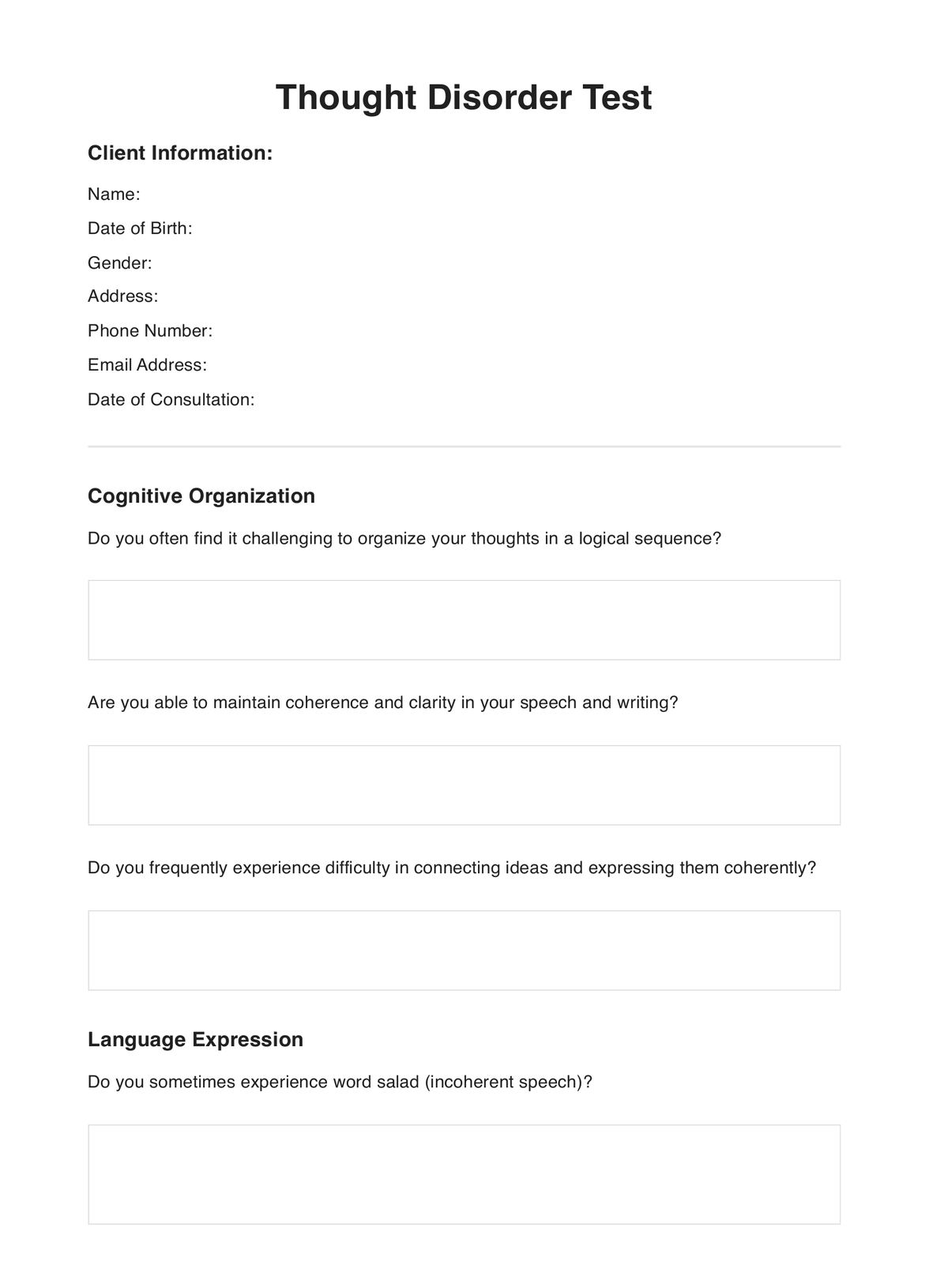
The test typically involves a series of questions, prompts, or tasks that aim to assess various aspects of cognitive functioning and language expression. It examines the individual's ability to organize thoughts logically, maintain coherence in speech, and convey ideas clearly and meaningfully. The assessment may also explore tangential or disorganized thinking, word salad (incoherent speech), or thought blocking (sudden interruption of thought flow).
Administered by qualified mental health professionals, the Thought Disorder Test helps determine the severity, type, and specific characteristics of any thought disorder present. The results can aid in diagnosing an individual's mental health condition accurately, enabling appropriate treatment and support strategies to be implemented.
The test may employ various methodologies, such as interviews, self-report questionnaires, or computerized assessments. To reach an informed conclusion, the evaluator considers multiple factors, including the individual's history, behaviors, symptoms, and observable signs of thought disturbance.
While a Thought Disorder Test is essential in psychiatric evaluation, it should be used as part of a comprehensive assessment alongside other diagnostic measures. It provides valuable insights into individuals' cognitive patterns, facilitating a better understanding of their mental well-being and enabling tailored treatment plans.