
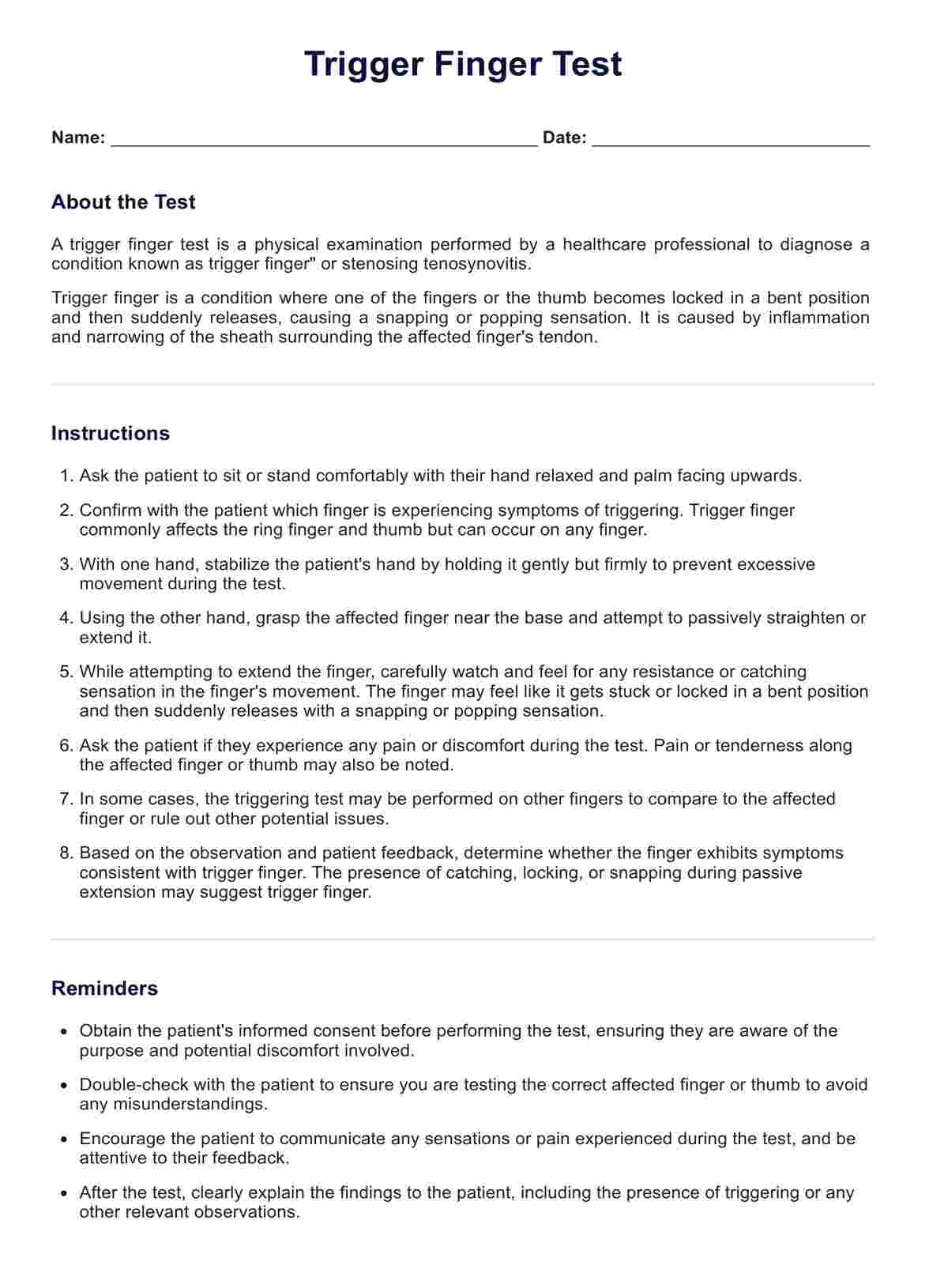




What is a Trigger Finger Test?
Trigger finger, also known as stenosing tenosynovitis, is a condition that predominantly affects the fingers and thumbs, leading to pain, stiffness, and difficulty in moving the involved digit. This condition arises when the flexor tendons, responsible for bending the fingers, become inflamed or swollen. Consequently, the tendon's movement through the tendon sheath, specifically the A1 pulley at the base of the finger, is hindered. This disruption can cause the finger or thumb to lock in a flexed position and then suddenly snap straight, mimicking the action of pulling and releasing a trigger, thereby earning the name "trigger finger."
The treatment for trigger finger may involve various strategies. Initially, resting the affected digit, using a night splint to keep the finger straight, and applying anti-inflammatory medications are common non-surgical approaches. In cases where inflammation is significant, corticosteroid injections into the tendon sheath may be administered to reduce swelling and relieve pain.
In more severe or persistent cases, surgical treatment, known as trigger finger release surgery, may be necessary. This surgical procedure involves cutting the A1 pulley to allow the tendon to glide more freely. Trigger finger release surgery is usually considered after other treatments, like stretching exercises, hand therapy, or steroid injections, have failed to provide relief.
During a physical exam, medical professionals use the trigger finger test as a critical diagnostic tool. This involves asking the patient to perform specific movements with the affected finger or thumb, looking for any signs of triggering, finger locking in a flexed position, or difficulty in straightening the finger. This test helps in observing tendon movement and assessing the severity of the condition.
By carefully evaluating these symptoms through physical examination and considering patient history, healthcare providers, including hand therapists and orthopaedic surgeons, can accurately diagnose trigger finger. This comprehensive approach enables them to determine the most effective treatment plan, which may range from simple interventions like padded gloves to reduce inflammation and avoid injury, to more complex measures such as hand surgery, particularly in diabetic patients or those with other underlying medical conditions.
Printable Trigger Finger Test
Download this Trigger Finger Test to better assess your patients.









