
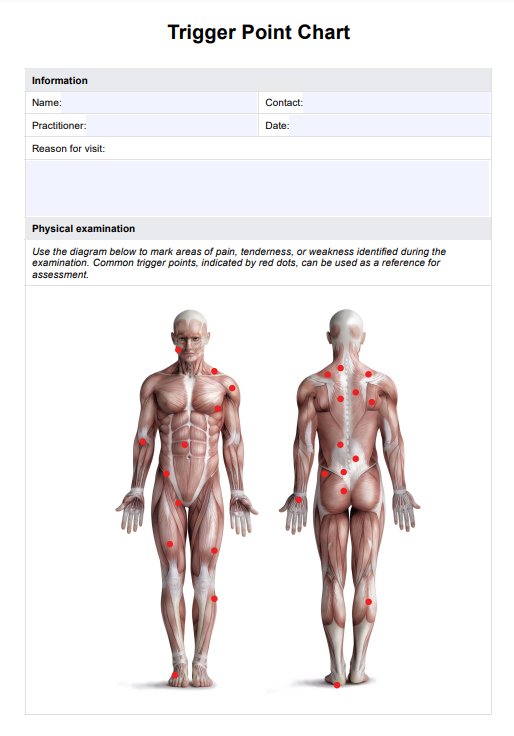




What is a Trigger Point Chart?
A Trigger Point Chart is a visual tool that identifies common areas in muscles where tight, sensitive fibers—known as trigger points or "muscle knots"—frequently form. These myofascial trigger points arise within a muscle or its surrounding fascia, often due to factors such as overuse, poor posture, physical injury, or chronic stress. They can cause localized pain or refer pain to other parts of the body. For instance, a trigger point in the upper trapezius muscle may produce pain that radiates to the side of the head, mimicking a tension headache.
Trigger points are classified into two main categories:
- Active myofascial trigger points: These cause pain without any external pressure and are typically associated with referred pain patterns.
- Latent myofascial trigger points: These are dormant and only become painful when palpated or manipulated.
Trigger Point Charts are invaluable for identifying and managing pain linked to these areas. By visually highlighting the most common trigger point locations—such as in the trapezius, gluteus medius, or gastrocnemius—these charts assist practitioners in pinpointing the true source of pain. This is particularly useful for addressing referred pain, where the perceived discomfort occurs far from the actual trigger point. With their ability to guide targeted and effective treatments, Trigger Point Charts are essential tools for both diagnostic accuracy and pain relief.









