Age guidelines for temperature readings
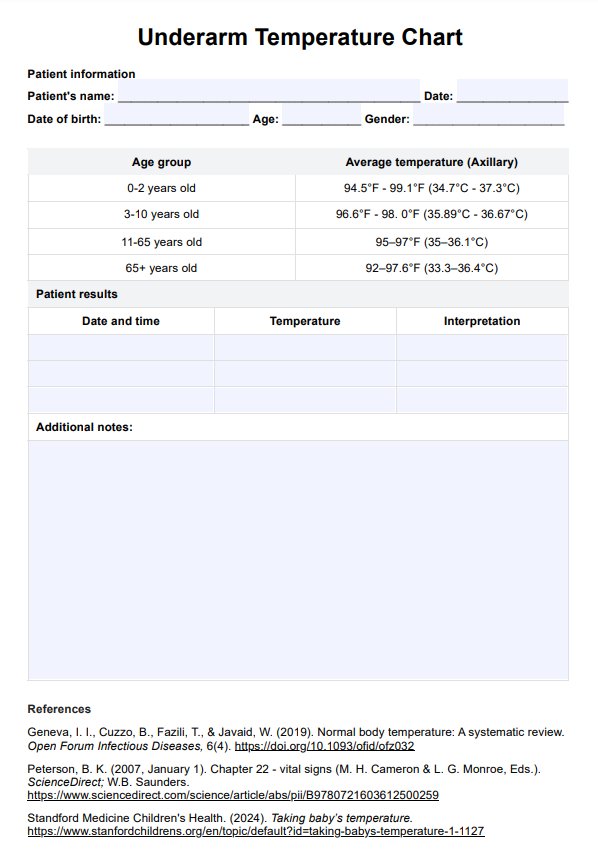
Different age groups have varying norms and considerations for temperature readings. Here are guidelines tailored for each age category (Geneva, et. al, 2019; Peterson, 2007; Standford Medicine Children's Health, 2024):
Infants aged 0-2 years
normal axillary temperature typically ranges between 94.5°F and 99.1°F (34.7°C - 37.3°C). This age group may exhibit slightly wider fluctuations in body temperature compared to older children. A temperature reading below 94.5°F may suggest hypothermia, while anything above 99.1°F could indicate fever.
Children between 3 and 10 years old
The average axillary temperature falls between 96.6°F and 98.0°F (35.9°C - 36.7°C). Temperatures outside this range could signal an underlying condition. A reading of 100.4°F (38°C) or higher generally indicates a fever that may need medical attention, especially if it is accompanied by other symptoms such as lethargy, irritability, or difficulty breathing.
Adolescents and adults aged 11 to 65 years
The typical axillary temperature is between 95°F and 97°F (35°C - 36.1°C). A temperature lower than 95°F could be a sign of hypothermia, particularly in cold environments or after exposure to cold. On the other hand, a fever is usually defined as a temperature of 100.4°F (38°C) or above, at which point medical evaluation is recommended to determine the cause of the elevated temperature.
Older adults aged 65 and older
The average axillary temperature is slightly lower, ranging from 92°F to 97.6°F (33.3°C - 36.4°C). As older adults tend to have lower baseline body temperatures, readings below 92°F could indicate hypothermia, especially in those who are frail or have been exposed to cold conditions. Temperatures above 99°F (37.2°C) should be monitored closely, as even a mild fever in the elderly can be indicative of infection or other health concerns.