




What are Trauma and PTSD?
Trauma refers to an individual's emotional response to a deeply distressing or disturbing event that shakes their sense of security, leading to helplessness and vulnerability. Traumatic events can take various forms, each carrying the potential for significant psychological impact. These could include natural disasters like hurricanes or earthquakes, severe accidents such as car crashes, personal assaults including rape or mugging, or combat situations experienced by military personnel.
The body's natural response to traumatic events often involves the release of adrenaline, a stress hormone that triggers the "fight or flight" mode. This survival mechanism can be life-saving during immediate threats and contribute to long-term stress responses if unresolved.
Following exposure to a traumatic event, some individuals might develop a psychiatric disorder called Posttraumatic Stress Disorder (PTSD). PTSD is characterized by the person's inability to recover after experiencing or witnessing a terrifying event. This condition can cause individuals to experience various symptoms, including flashbacks, where they relive the trauma repeatedly, nightmares, severe anxiety, and uncontrollable thoughts about the event.
An often overlooked aspect of PTSD is the role of pride. Individuals dealing with PTSD often grapple with intense feelings of guilt and shame. These emotions can sometimes manifest as excessive pride, as individuals might believe they should have been able to prevent the traumatic event or better handle its aftermath. They may harbor unrealistic expectations of themselves, fostering a false sense of pride that can obstruct their healing process.
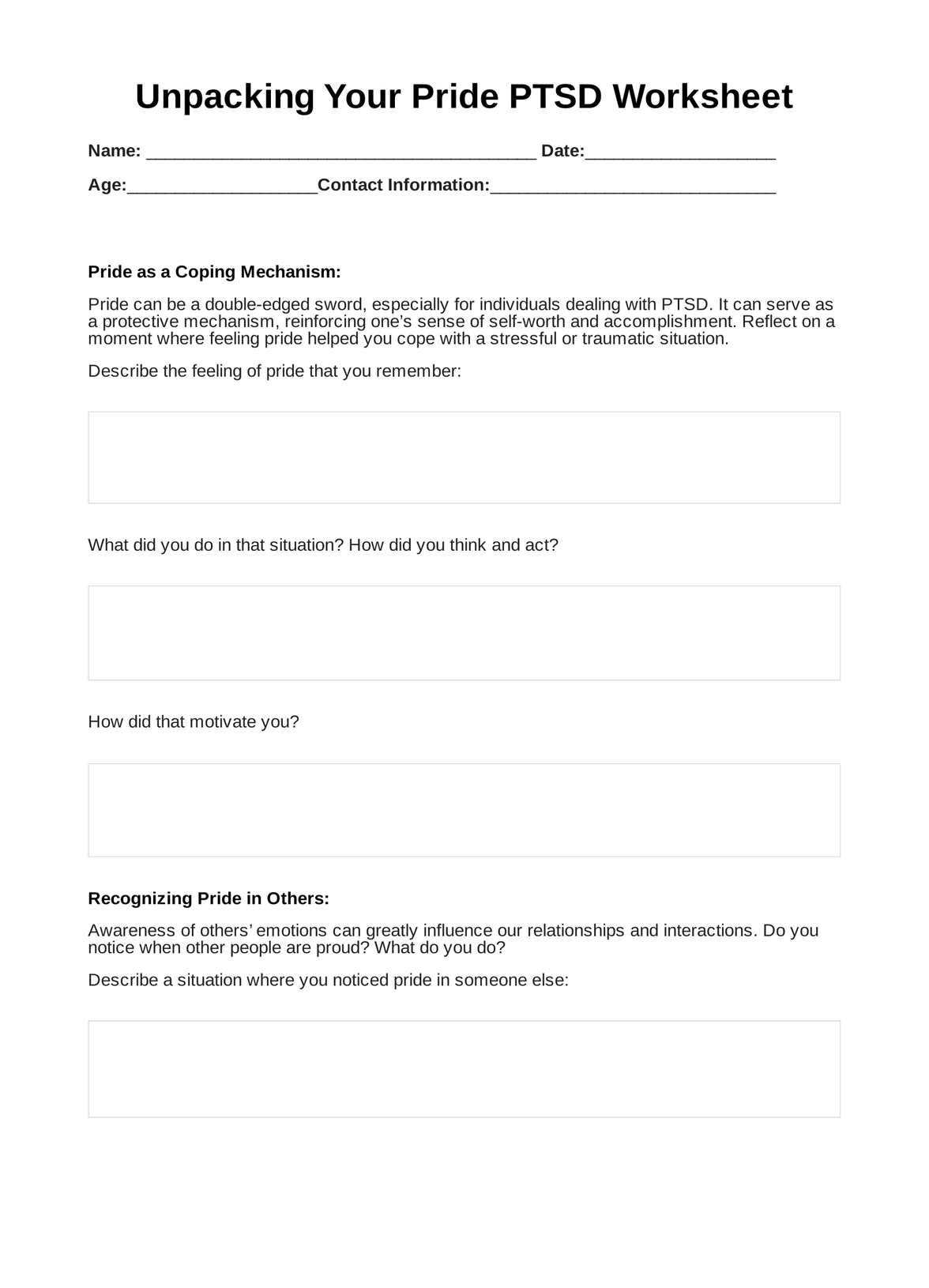
Managing PTSD can be complex, requiring a multifaceted approach that includes therapy, medication, self-care, and social support. However, there are numerous resources available to aid in self-exploration and understanding. For instance, using structured worksheets can provide individuals with a guided approach to navigating their feelings and trauma-related experiences. One such tool is the worksheet, which can be particularly valuable for individuals struggling with the intersection of PTSD and pride.
Understanding trauma and PTSD involves recognizing the wide variety of traumatic events, the physiological and psychological responses to these events, and the potential development of lasting mental health conditions like PTSD. It is crucial to acknowledge the role of pride in PTSD and utilize resources like PTSD worksheets to aid in recovery.









