




What is Trauma and PTSD?
In its profound complexity, trauma encompasses the harrowing and distressing experiences that push individuals beyond their capacity to cope effectively. It manifests through many harbingers, including accidents, natural calamities, acts of violence, or the horrors of abuse. Within this labyrinth of psychological responses, Post-Traumatic Stress Disorder (PTSD) emerges as a distinct condition, afflicting those who have endured or witnessed traumatic events.
The relentless persistence of symptoms marks PTSD, each a formidable impediment to the sufferer's daily existence. The symptoms form a tumultuous tapestry: intrusive memories and flashbacks surge to the forefront of consciousness, accompanied by haunting nightmares. Anxiety, corrosive in its intensity, pervades their psyche, compounding the emotional distress they endure. Avoidance, a coping mechanism forged in the crucible of trauma, becomes their refuge, leading to avoiding triggers, even those innocuous. Concentration wavers as the mind oscillates between the past and present, and the sufferer may become hyper-vigilant or easily startled.
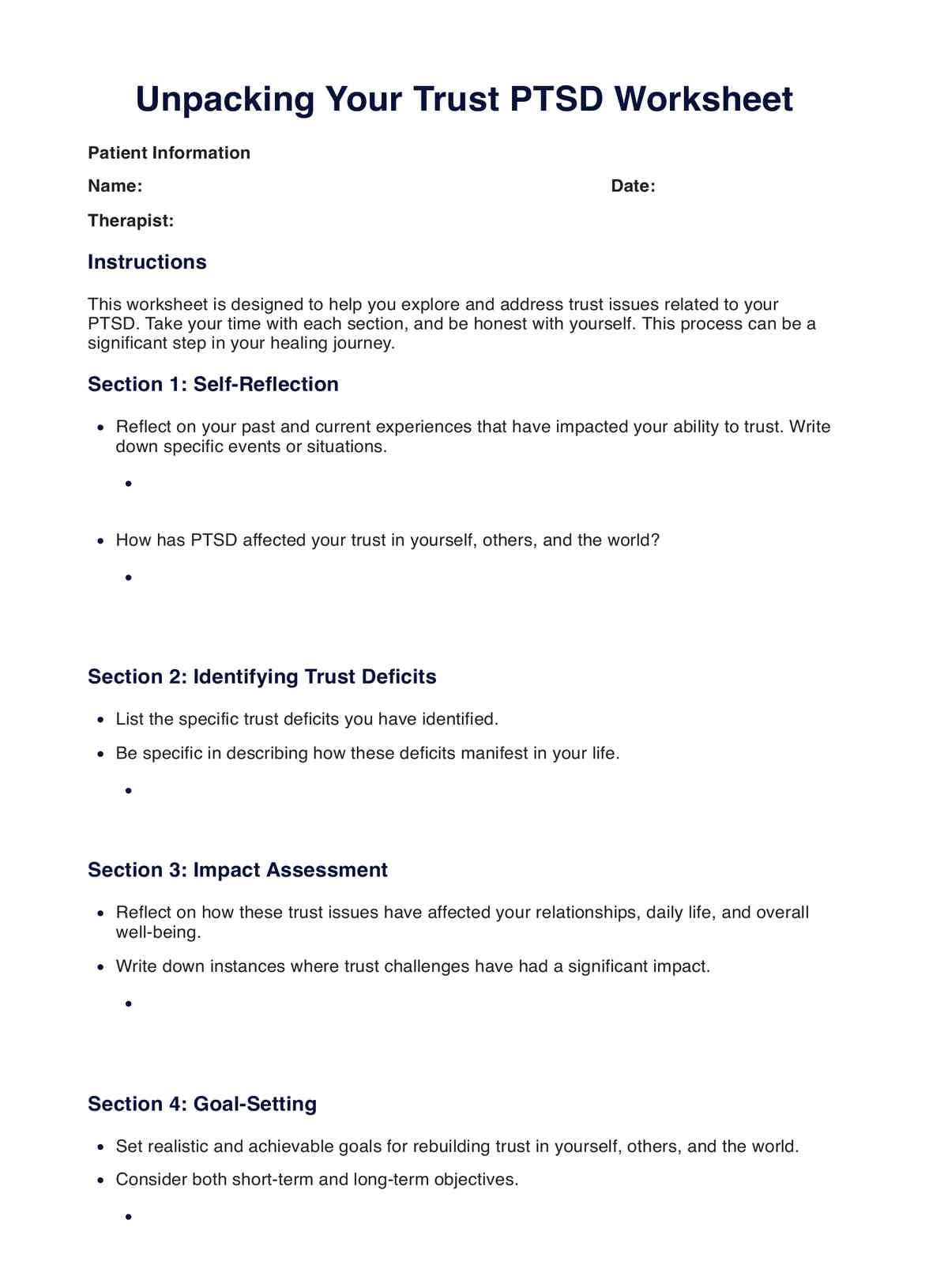
However, trust emerges as an enigmatic cornerstone in the context of PTSD. The seismic shockwaves of traumatic experiences obliterate trust within the individual, shattering their faith in themselves, others, and the fabric of the world. This leaves scars that extend into their interpersonal relationships, making it arduous to forge and sustain healthy connections. Seeking help and support becomes herculean, marred by skepticism and fear. Thus, the intricate process of healing encompasses a pivotal component: the painstaking endeavor to reconstruct trust as individuals with endeavor to rebuild their lives, their selves, and their connections with a world forever altered by trauma.









