
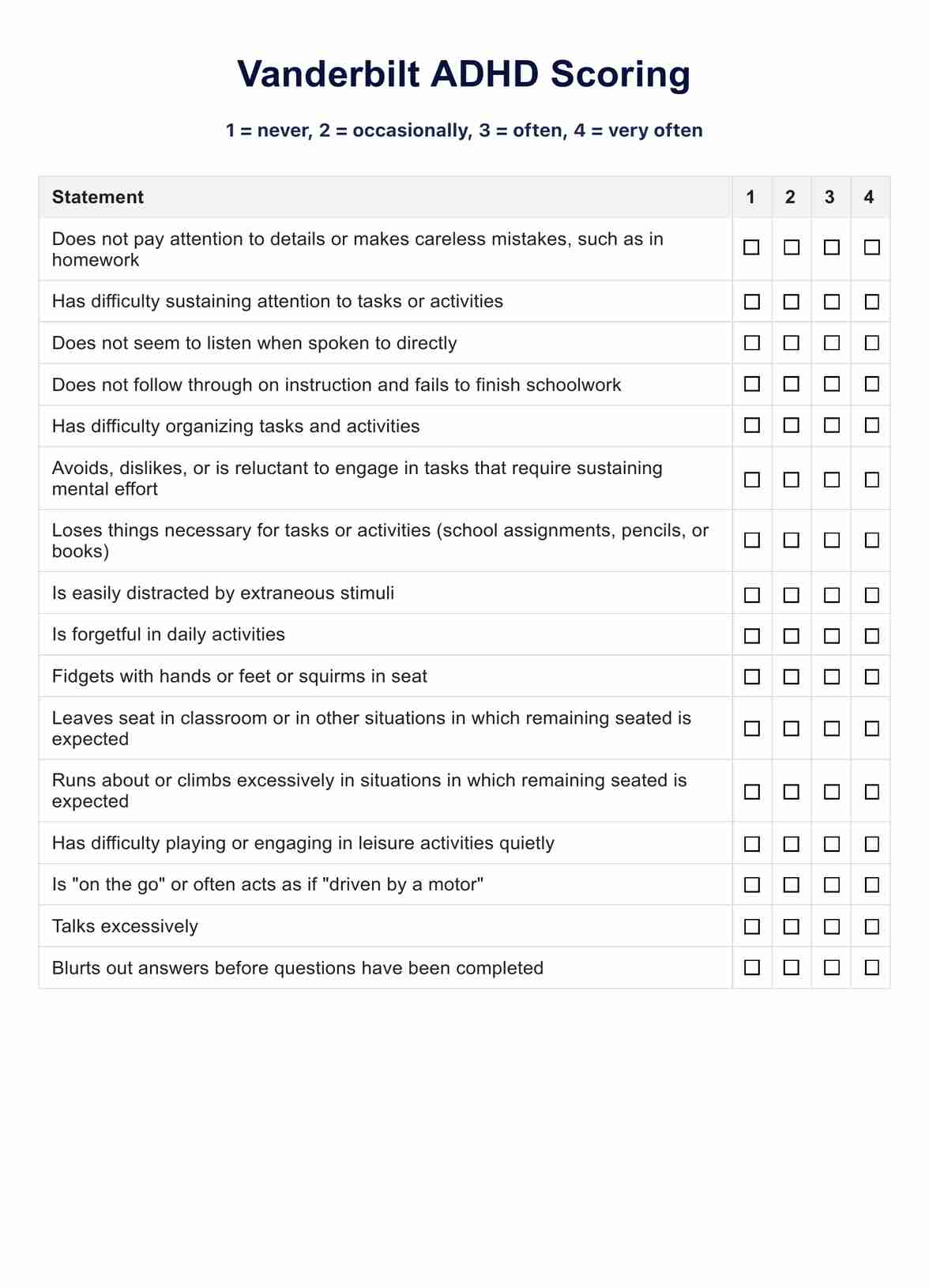




What is the Vanderbilt assessment scale?
The Vanderbilt Assessment Scale stands as a pivotal diagnostic tool employed by healthcare professionals to assess and diagnose Attention Deficit Hyperactivity Disorder (ADHD) in children aged 6-12 years. Developed by Mark L. Wolraich at the Oklahoma Health Sciences Center, these scales provide an in-depth and comprehensive evaluation of the core symptoms of ADHD and their intricate impact on a child's daily life.
This invaluable diagnostic instrument is bifurcated into two versions: the Vanderbilt ADHD Diagnostic Parent Rating Scale (VADPRS) and the Vanderbilt ADHD Diagnostic Teacher Rating Scale (VADTRS). Each version maintains a similar question format tailored to solicit observations from the parents' and the teachers' perspectives regarding the child's behavior. This dual-perspective approach significantly enriches the diagnostic process, acknowledging home and school's varying environments and expectations.
Comprising a set of 18 core questions, the Vanderbilt scales delve into multifaceted aspects of ADHD symptoms, addressing both inattentiveness and hyperactivity/impulsivity. For instance, questions may explore behaviors such as forgetting homework, difficulty organizing tasks, and observable actions like constant fidgeting or squirming. Beyond these core symptoms, the scales incorporate inquiries regarding disruptive behaviors, oppositional-defiant tendencies, and the potential presence of co-occurring conditions such as anxiety or depression.
Within the school context, the Vanderbilt Assessment Scales become integral tools in identifying ADHD in children. Educators and school psychologists collaboratively administer these scales to gain a comprehensive understanding of a child's behavioral patterns and cognitive functioning. The insights gathered are instrumental in crafting tailored strategies, such as developing Individualized Education Programs (IEPs) and implementing classroom accommodations. These measures aim to create an inclusive and supportive learning environment that addresses the specific challenges associated with ADHD.
The Vanderbilt scales offer several advantages over other ADHD assessment tools:
Standardized scoring: The scales provide a clear and objective way to assess symptoms and compare results to age-appropriate norms.
Multiple perspectives: Gathering information from parents and teachers gives a more holistic view of the child's behavior in different settings.
Focus on both symptoms and impact: The scales assess the presence of symptoms and how they affect the child's daily functioning at home and school.
Flexibility: The scales can be used for initial diagnosis and monitoring progress over time with treatment.
Overall, the Vanderbilt Assessment Scales are a valuable tool for healthcare professionals to accurately diagnose ADHD in children and develop effective treatment plans in pediatric psychology. By providing a comprehensive and standardized assessment, these scales can help children with ADHD receive the support they need to reach their full potential.









