



Vegan Diet Food ListAI Template IconToolbar IconShare Icon

Vegan Diet Food List

Download our free vegan diet food list to kickstart your vegan journey!

Matt Olivares avatar

By Matt Olivares on Aug 2, 2025.

Fact Checked by Ericka Pingol.

Use Template

What is a Vegan Diet Food List?

Vegan food lists are intended for individuals adopting a healthy diet and lifestyle. These resources are typically created by healthcare professionals—such as dietitians or nutritionists—who customize meal plans based on clinical needs, or by individuals who have conducted research and are preparing to transition to a plant-based diet focused on healthy eating and whole foods.

These lists provide structured guidance on essential food to include in a vegan diet. These diets commonly involve vegetables, fruits, whole grains, nuts and seeds, legumes, and substitutes for animal products to ensure adequate nutrient intake (Łuszczki et al., 2023). They may also reflect specific health goals, such as managing chronic conditions, reducing disease risk, or achieving and maintaining a healthy weight through a balanced vegan diet.

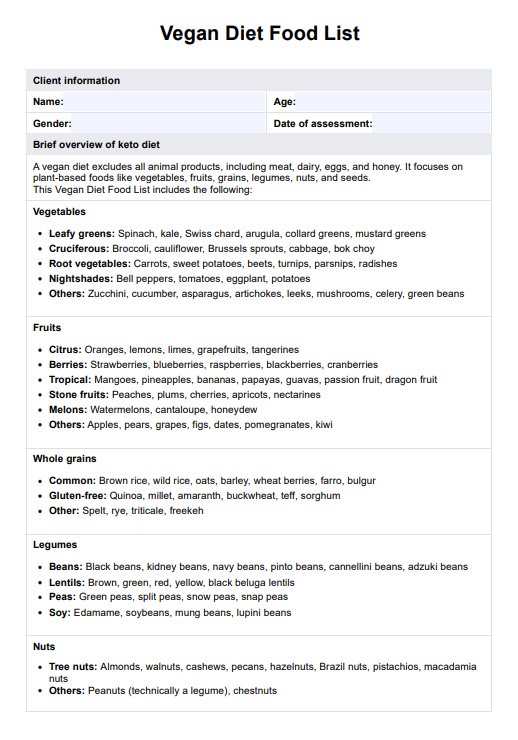
A general Vegan Diet Food List typically includes the following:

  • Vegetables (e.g., spinach, carrots, kale, bell peppers, broccoli, sweet potatoes, dark leafy greens)
  • Fruits (e.g., mangoes, watermelons, pineapple, grapes, oranges)
  • Whole grains (e.g., brown rice, quinoa, barley, wheat, oats)
  • Legumes (e.g., chickpeas, black beans, soybeans, kidney beans, lentils)
  • Nuts (e.g., almonds, walnuts, almond butter, nut butter)
  • Seeds (e.g., chia seeds, hemp seeds, pumpkin seeds)
  • Meat alternatives (e.g., tofu, tempeh, seitan, plant-based protein powders, vegan burgers, popular meat alternative)
  • Milk alternatives (e.g., soy milk, oat milk, coconut milk, plant based milk, dairy alternatives)
  • Herbs and spices (e.g., cilantro, thyme, garlic, paprika)
  • Plant oils (e.g., olive oil, coconut oil, healthy fats)
  • Natural sweeteners (e.g., maple syrup, coconut sugar)
  • Plant-based condiments (e.g., hummus, salsa, banana ketchup, nutritional yeast, fermented foods)

To support diverse dietary preferences, maximize health benefits, and improve client satisfaction, healthcare professionals may also consider using additional structured resources such as the Tom Brady Diet Plan Template and the Vegan Diet Plan Template to create a comprehensive vegan shopping list.

Vegan Diet Food List Template

Download PDF Template

How does our Vegan Diet Food List work?

Carepatron’s vegetarian diet food list is designed to support clinicians in delivering evidence-based dietary guidance for patients adopting a plant-based lifestyle. This tool streamlines assessments, improves patient education, and promotes nutritional adherence by organizing essential vegan food categories in a customizable, easy-to-use format that aligns with the principles of a balanced diet and plant based diet.

Step 1: Access the food list handout

Click the “Use template” button on this page to open the handout directly in Carepatron’s platform. You’ll be prompted to log in or download the Carepatron app if you haven’t already. This ensures immediate access to the editable template for seamless integration into your care workflow. You can also click "Download" to immediately get a PDf copy.

Step 2: Use the food list during patient assessment

The handout serves as a clinical tool during dietary intake assessments or nutrition counseling. Fill in the client’s identifying information and review the categorized food groups to support education and dietary planning. It can be used during in-person consultations, telehealth visits, or as part of ongoing treatment documentation, especially when evaluating intake of omega 3 fatty acids, vitamin b12, vitamin d, or highly processed foods.

Step 3: Discuss how the handout works

Guide the patient through each food category—such as legumes, whole grains, and plant-based proteins—while emphasizing nutrient balance. Use the pre-filled examples to illustrate dietary options, and customize selections based on the patient’s preferences, goals, or clinical needs. The additional notes section supports goal setting and care planning focused on achieving a healthy vegan diet with all the nutrients needed.

Step 4: Provide additional patient support

Use the bottom fields to sign off as the overseeing clinician, reinforcing professional guidance. Encourage patients to reference the list between appointments. The template can be exported, printed, or shared electronically to support follow-up care, improve dietary compliance, and integrate into broader nutritional interventions such as identifying suitable meat substitutes, reading nutrition labels, or avoiding processed meat and packaged foods.

When to use this Vegan Diet Food List?

The Vegan Diet Food List template may be used at any time to support plant-based dietary planning. Below are common scenarios in which healthcare providers or individuals may find the tool especially beneficial, particularly in reducing food waste and improving digestive health.

Gradual transition to a vegan diet

For clients who are not ready to adopt a fully vegan diet immediately, this template can facilitate a gradual transition. Clinicians may use it to document both vegan and non-vegan food items during the early stages. Over time, the proportion of plant-based foods increases until the list becomes exclusively vegan, supporting dietary adaptation at a sustainable pace and helping former meat eaters build confidence in vegan cooking and vegan meals.

Dietary adjustment due to an underlying condition

Patients managing chronic conditions may be advised to reduce or eliminate animal products as part of their treatment plan. The food list serves as a structured guide for introducing and maintaining plant-based foods that support symptom control and long-term health outcomes. It can be adjusted over time based on clinical progress or emerging health concerns such as heart disease, kidney disease, or nutrient deficiencies.

Supporting ethical or environmental values

Some individuals adopt a vegan diet to align with personal ethics or environmental sustainability goals. This handout helps organize appropriate food options and offers a clear starting point for building a diet free of animal-derived foods and animal products. The template supports long-term adherence by offering structure and flexibility during the transition to a values-driven lifestyle that prioritizes plant protein, fruits and vegetables, and vegan sources of nutrients.

The Vegan Diet Food List is a versatile clinical tool that can be used proactively or reactively, depending on each patient’s goals, readiness, and medical context.

What are the benefits of having a vegan diet?

Following a vegan diet can offer the following benefits:

Supports healthy weight management

A well-structured vegan diet can promote gradual, sustainable weight loss without reliance on supplements or invasive interventions. Plant-based foods are typically lower in calories and saturated fats compared to animal products, making it easier for individuals to achieve and maintain a healthy body weight, even with minimal physical activity.

Promotes cardiovascular and digestive health

Vegan diets are naturally low in cholesterol and saturated fat while being rich in dietary fiber. These properties contribute to improved cardiovascular outcomes, including reduced risk of hypertension, stroke, and heart disease. Additionally, increased fiber intake supports gastrointestinal health by promoting regular bowel movements and maintaining a balanced gut microbiota.

Reduces risk of chronic disease

Adopting a vegan diet has been associated with a lower risk of several chronic conditions, including type 2 diabetes, certain cancers (particularly those linked to obesity), and kidney disease. The emphasis on whole, nutrient-dense plant foods helps support metabolic function and may contribute to disease prevention and overall longevity.

References

Łuszczki, E., Boakye, F., Zielińska, M., Dereń, K., Bartosiewicz, A., Oleksy, Ł., & Stolarczyk, A. (2023). Vegan diet: Nutritional components, implementation, and effects on adults’ health. Frontiers in Nutrition, 10, 1294497. https://doi.org/10.3389/fnut.2023.1294497

Commonly asked questions

Plant-based protein bars, vegetable sticks and hummus, popcorn, and fruit slices!

Yes. If a vegan diet is well-planned, the person following the plan will get everything they need despite not having any meat or dairy products. Many famous vegan athletes include Venus Williams, Nate Diaz, Fiona Oakes, and Kyrie Irving.

They can get protein from meat alternatives, legumes, and quinoa.

EHR and practice management software

Get started for free

*No credit card required

Free

$0/usd

Unlimited clients

Telehealth

1GB of storage

Client portal text

Automated billing and online payments







