



What is visual acuity?
Visual acuity refers to the clarity or sharpness of one's vision. In other words, visual acuity is a quantitative assessment of the eye's ability to make out shapes and the details of objects at a distance. It's not just about how small a letter an individual can read but also how well they can perform tasks that require sharp vision. It gauges the eye's capacity to resolve spatial detail, which is critical for most visual tasks in our everyday life.
Normal visual acuity, commonly called "20/20 vision" or "6/6 vision," indicates that a person can see the standard at the measured distance. Having less than normal visual acuity (e.g., 20/40, 6/12, etc.) is a signal to dig deeper into the underlying causes.
Visual acuity decreases for various reasons, ranging from refractive errors correctable with glasses or contact lenses to more severe conditions such as permanent vision damage that might need medical intervention. Uncorrected visual acuity can lead to difficulties in daily activities such as reading, driving, and recognizing faces.
Thus, assessing and addressing these concerns early on is vital to improve one's well-being and functional abilities.
Why is visual acuity important?
As a clinical marker, visual acuity is essential for identifying the presence and extent of many eye disorders. Good visual acuity indicates a well-functioning retina and precise optical pathway. However, when acuity is compromised, it can be a red flag for conditions like refractive errors and even systemic diseases like diabetes, which can affect the eyes.
Furthermore, our ability to see the world in high definition also impacts our daily experiences. Visual acuity is essential here as it influences how a person navigates, interacts, and enjoys life. A clear vision allows us to make sense of the visual cues in our environment, from recognizing a face across the room to reading traffic signs while driving.
Many professions also require a high visual acuity. For instance, surgeons, drivers, and architects depend heavily on excellent vision to perform their tasks effectively. Here, visual acuity is not just about clarity but also about safety and precision in professional environments.
Overall, visual acuity is vital to how we experience the world and our interactions within it. Good visual acuity supports an individual's capacity to live, work, and play in a visually rich and demanding world. Keeping this at the forefront of patient care ensures we help maintain eye health and overall quality of life.
What's the difference between visual acuity and visual perception?
Though they are related, it is essential to differentiate clearly between visual acuity and visual perception. Understanding their distinctions is crucial for effective diagnosis and treatment.
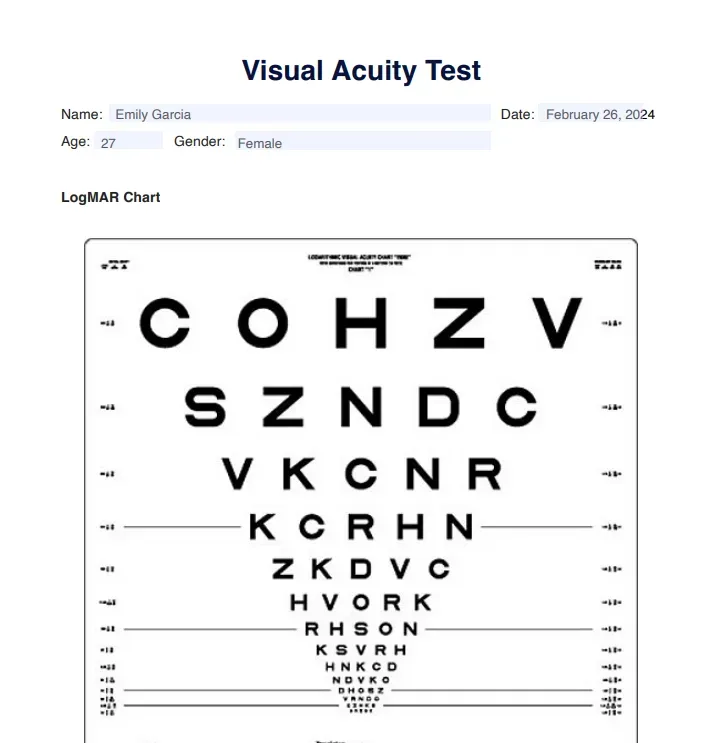
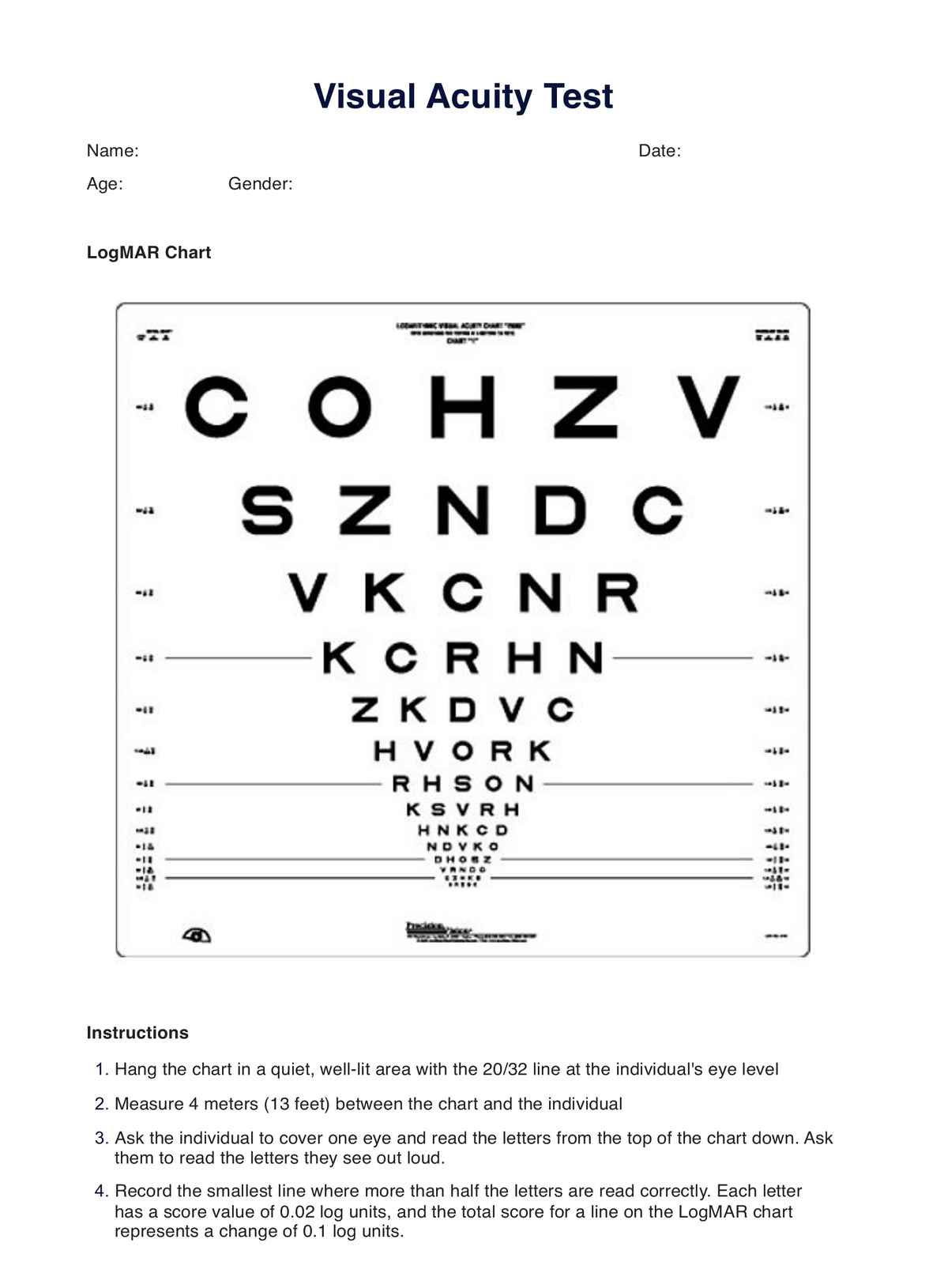
At its core, visual acuity is a quantitative measure of the eye’s ability to see and distinguish the fine detail of objects. This is what we measure when a patient reads an eye chart. Here, we identify the most miniature letters they can differentiate at a standardized distance. According to the American Optometric Association, 20/20 vision is considered normal eyesight, which means a person can read letters from a distance of 20 feet that most people can read from that distance.
On the other hand, visual perception is the brain's ability to interpret and make sense of the visual information gathered by the eyes. This complex cognitive process involves recognizing shapes, depth perception, appreciating color, and visualizing movement. This process requires cognition—the ability to process and understand visual information.
In practice, a patient may have 20/20 vision and exceptional visual acuity but struggle with visual perception due to a neurological condition affecting their visual processing. Alternately, an individual with reduced visual acuity might still have strong visual perceptual skills. Through visual acuity tests and clinical judgment, we can tailor interventions that address concerns in both acuity and perception.
What problems can visual acuity impairment cause?
As practitioners, we could often discuss the results of a visual acuity test and what they mean. Yet, it’s just as important to understand the consequences of visual acuity impairment. Patients rely on our expertise to diagnose and understand what these issues mean for their daily lives. For instance, patients can experience the following:
- Difficulty with fine detail: Small print in books or medication labels can be hard to read, affecting a patient's independence and potentially leading to mistakes.
- Challenges in driving and navigating spaces: Reduced acuity can impact one's ability to react to road signs or obstacles, raising safety concerns.
- Struggle with screen use: In our digital age, prolonged use of computers or smartphone apps can cause eye strain, particularly if visual acuity is impaired.
- Learning difficulties: In very young children, the inability to see clearly can hinder learning and concentration, affecting academic performance.
- Work-related issues: Jobs that require fine motor skills and sharp, precise vision can become complicated, affecting livelihood and career progression.
- Reduced physical activity: Uncertainty in vision may result in less physical activity, contributing to various health conditions related to inactivity.