
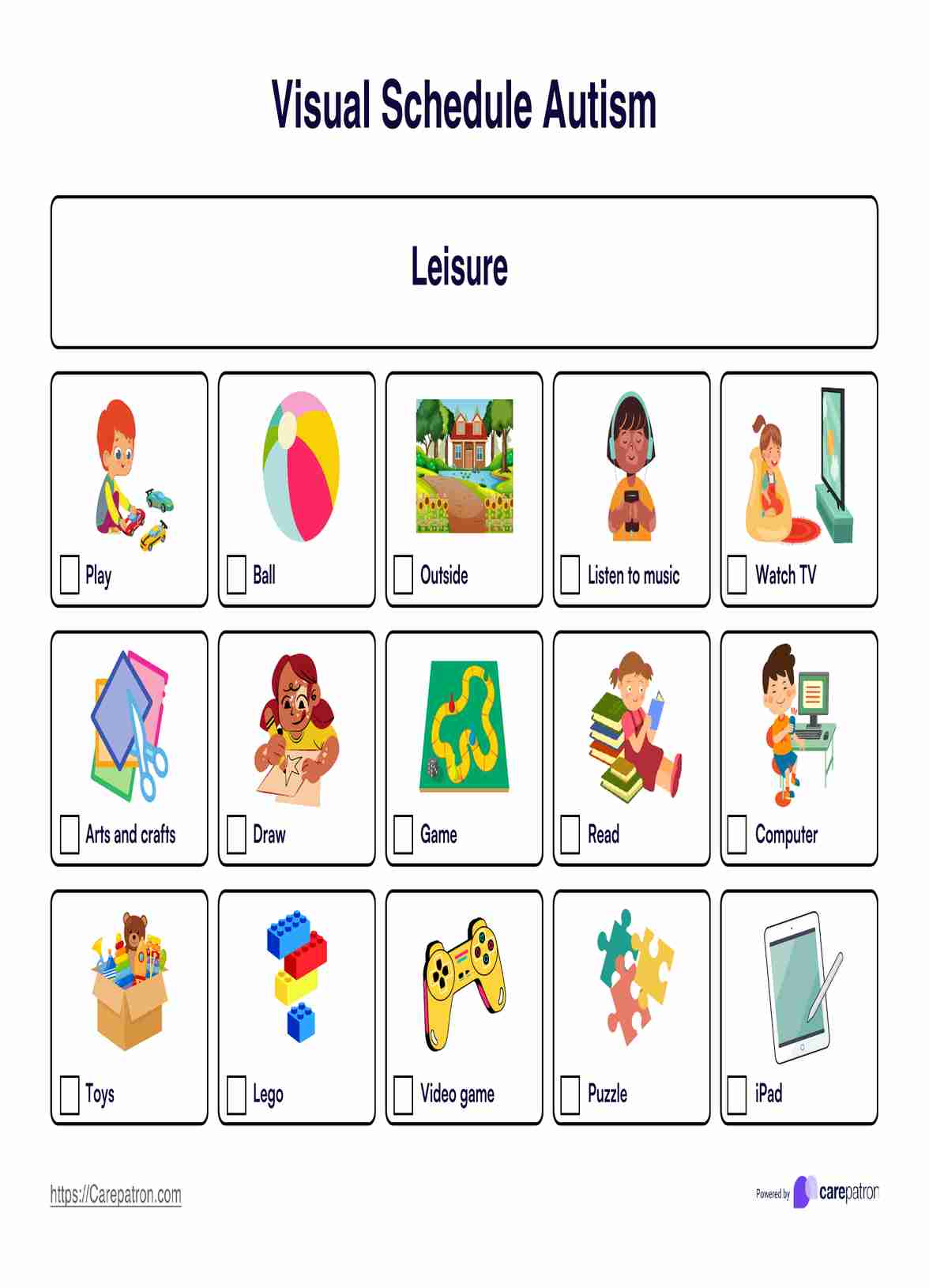




What are visual schedules?
Visual schedules are systematic and structured tools that employ visual cues, symbols, images, or words to represent a sequence of activities or tasks to provide visual support. These schedules play a crucial role in supporting individuals with autism spectrum disorder and other neurodevelopmental disorders by offering a visual representation of routines and activities. Tailored to individual needs, visual schedules provide a clear and organized overview of daily tasks, helping to reduce anxiety and foster predictability.
The main aim of visual schedules is to break down complex activities or routines into manageable, sequential steps to increase the feeling of control held by the individual. By utilizing visual supports, individuals can better comprehend and anticipate each phase of an activity, promoting a sense of order and control. These schedules are versatile and can be adapted to various settings, including home, school, or therapy environments, making them valuable tools for enhancing communication and supporting daily functioning.
Visual schedules are particularly beneficial for individuals with developmental disabilities who may struggle with verbal communication or face challenges in understanding and following verbal instructions alone. These tools can encompass a wide range of activities, from morning routines and classroom activities to leisure activities and transitions between tasks. Ultimately, visual schedules serve as empowering aids that contribute to improved organization, comprehension, and independence for individuals navigating their daily lives.









