




What is a Visual-Spatial Intelligence Test?
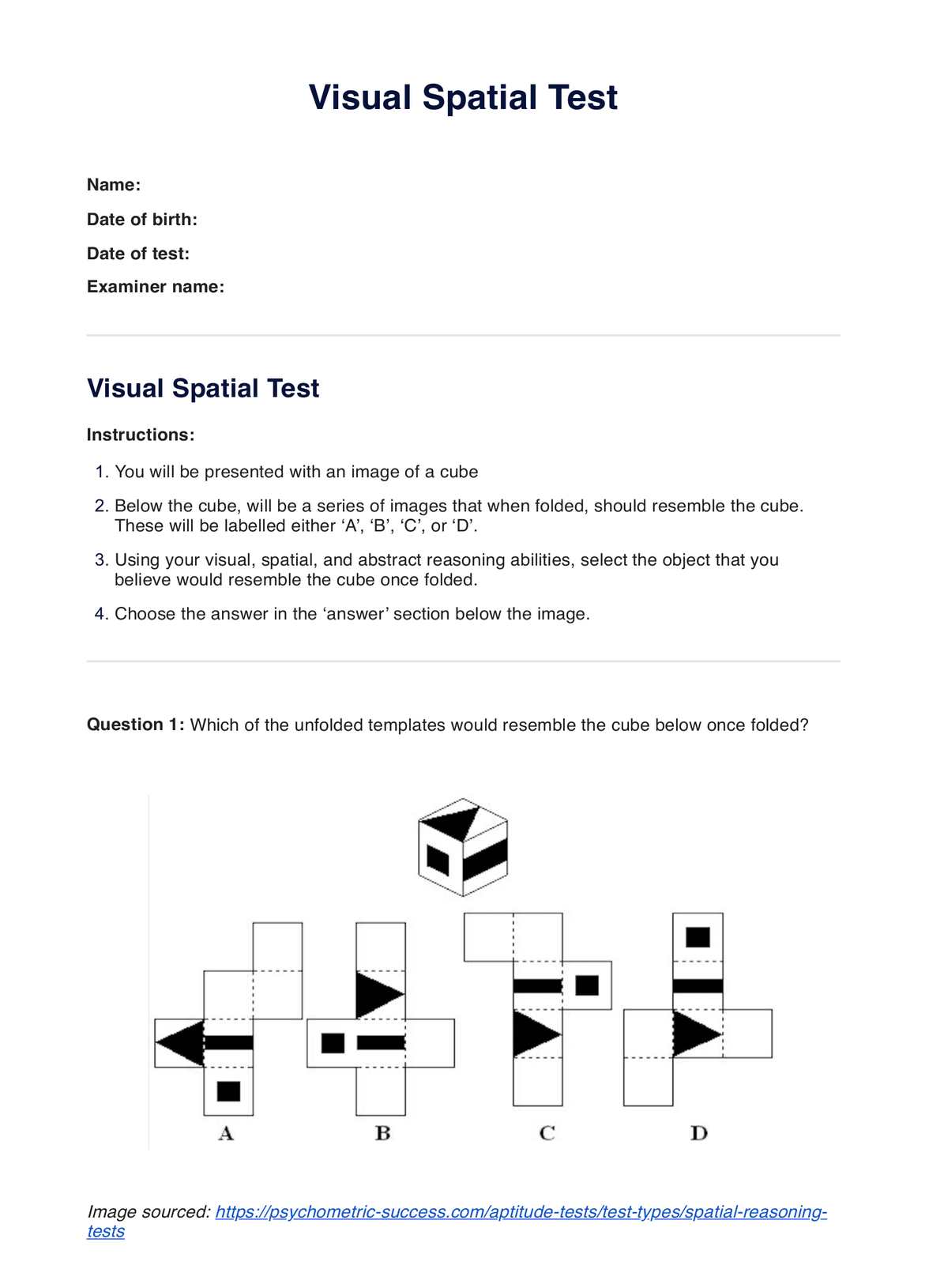
A Visual-Spatial Intelligence Test is designed to assess an individual's visual and perceptual abilities, spatial reasoning, and overall spatial intelligence. These tests, which may include visual spatial intelligence test and reasoning tests, aim to evaluate cognitive skills related to spatial thinking, mental rotation, and abstract reasoning. By presenting tasks that require the manipulation of spatial information and the identification of patterns, these assessments provide valuable insights into an individual's spatial abilities.
Spatial intelligence is a multifaceted trait that encompasses the ability to mentally manipulate spatial information and understand the spatial relationships between objects. This type of visual spatial intelligence test is well-suited for individuals pursuing careers in STEM (science, technology, engineering, and mathematics) fields. The practical significance of Visual-Spatial Intelligence Tests extends beyond academic settings, offering a unique perspective on how these spatial intelligence skills are applied in everyday life.
In the realm of educational psychology, these tests play a crucial role in better understanding individuals' cognitive abilities, especially their spatial aptitude. Often integrated into IQ assessments, Visual-Spatial Intelligence Tests contribute to the development of skills relevant to mathematics, science, technology, and engineering. As such, they serve as a valuable tool for individuals seeking to identify, measure, and enhance their spatial intelligence, providing a fun and engaging way to explore cognitive abilities related to spatial thinking and problem-solving.









