
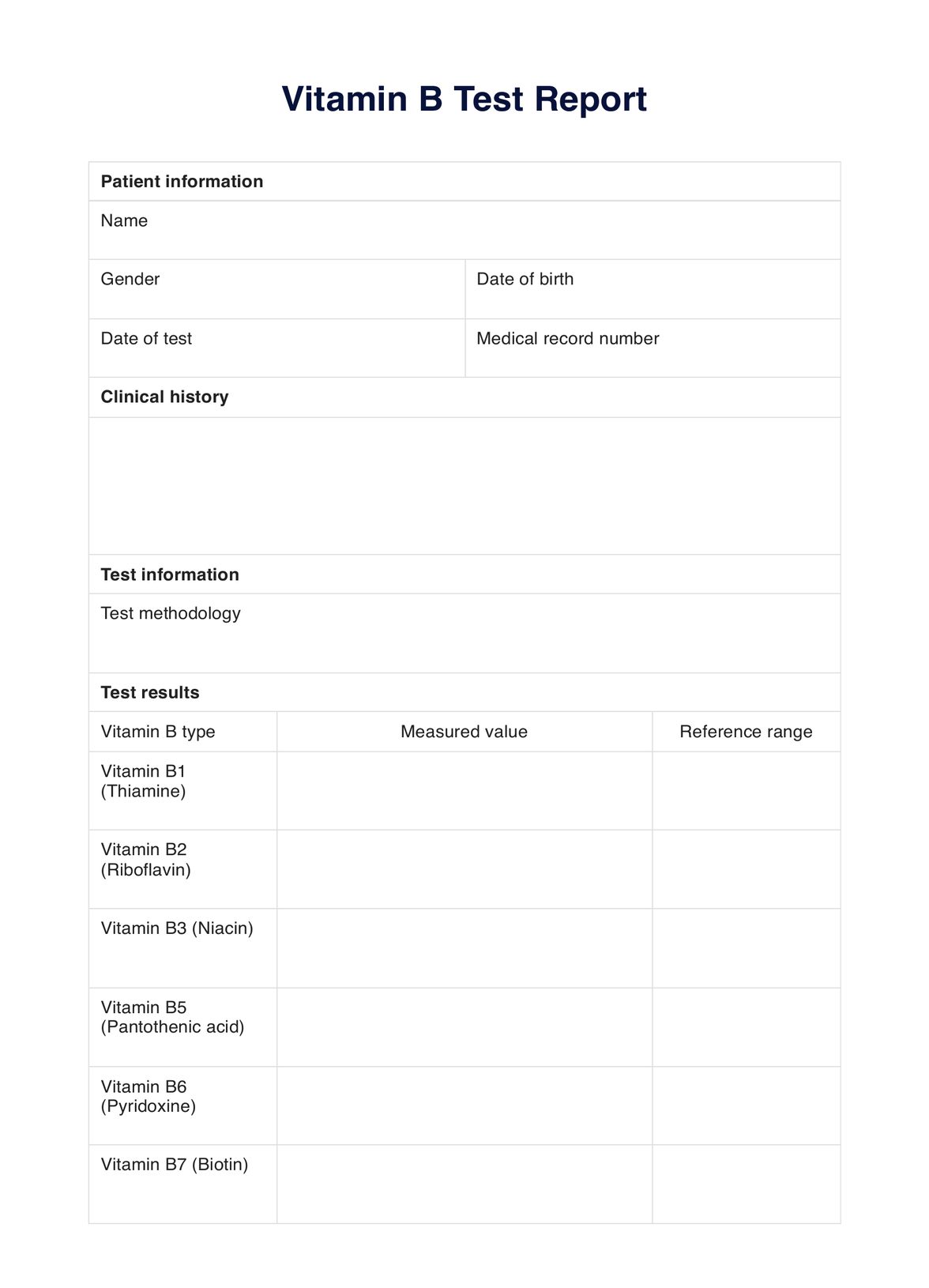




What is a vitamin B test?
A vitamin B test, also known as a vitamin B panel or profile, is a diagnostic blood test designed to measure levels of eight essential B vitamins in the body. These vitamins include:
- Thiamine (B1): Vitamin B1 supports carbohydrate metabolism and nerve function.
- Riboflavin (B2): Vital for energy production and cell health.
- Niacin (B3): Niacin is crucial for DNA repair, metabolism, and maintaining healthy skin.
- Pantothenic acid (B5): A key component in synthesizing coenzyme A, necessary for fatty acid metabolism.
- Pyridoxine (B6): This plays an important role in neurotransmitter synthesis and red blood cell production.
- Biotin (B7): B7 promotes healthy skin, nails, and metabolism.
- Folic acid (B9): This is essential for DNA synthesis and vital during pregnancy to support fetal development.
- Cobalamin (B12): Vitamin B12 is important for maintaining neurological health and producing red blood cells.
These vitamins are essential for energy production, immune system function, and nervous system health. Vitamin B deficiencies may result from inadequate dietary intake, malabsorption disorders (e.g., celiac disease, Crohn’s disease), or lifestyle factors such as chronic alcohol use. Symptoms of deficiency often include fatigue, anemia, irritability, numbness, tingling, or difficulty concentrating.
How is the test performed?
A vitamin B test involves drawing blood from the patient, usually from the arm. The sample is sent to a laboratory for analysis, and patients may need to prepare beforehand by fasting or temporarily stopping medications that could affect results.
The test results will identify whether Vitamin B levels are within the normal range, below normal (deficient), or above normal (excessive). Based on these findings, healthcare providers can recommend appropriate interventions, such as dietary adjustments or supplementation, or conduct further investigations if necessary.









