




What is voyeuristic disorder?
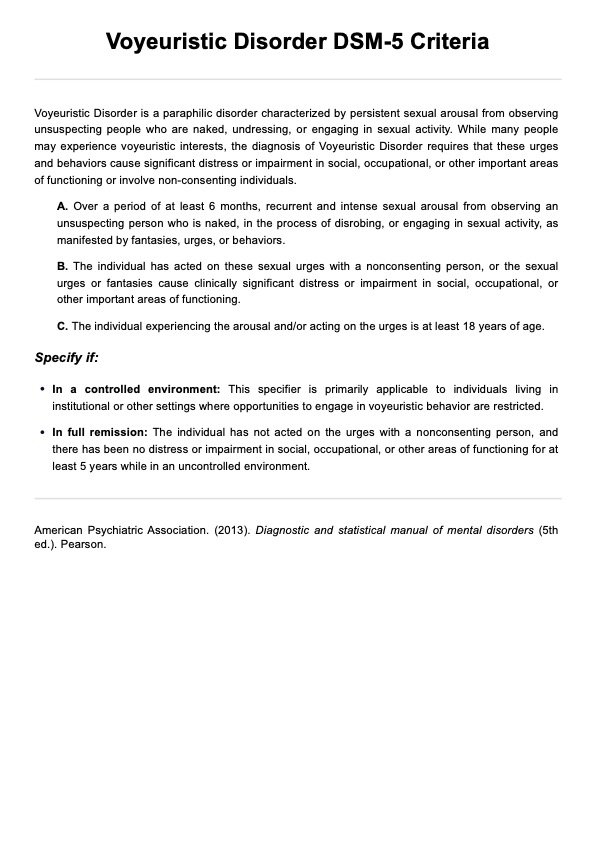
Voyeuristic disorder is a mental health condition classified as a paraphilic disorder. It involves recurrent and intense sexual arousal from observing an unsuspecting person who is naked, in the process of undressing, or engaging in sexual acts. People with this disorder can be sexually aroused through sexual fantasies, voyeuristic urges, or voyeuristic behavior. To qualify as a disorder, these symptoms must persist for at least six months and cause clinically significant distress or impair important areas of functioning, such as social relationships or work performance.
Voyeuristic disorder differs from age-appropriate sexual curiosity or exploration. It is characterized by observing individuals in sexual activities without their consent, often putting the observer at legal and social risk. This behavior typically begins in adolescence but can continue into adulthood if left unaddressed.
Risk factors for voyeuristic tendencies include other sexual disorders, a history of childhood sexual abuse, early exposure to inappropriate sexual content, or co-occurring mental health issues. Recognizing and treating any voyeuristic behavior and tendencies is essential to prevent harm to both the individual and others, ensuring the behavior does not escalate or result in legal consequences.









