
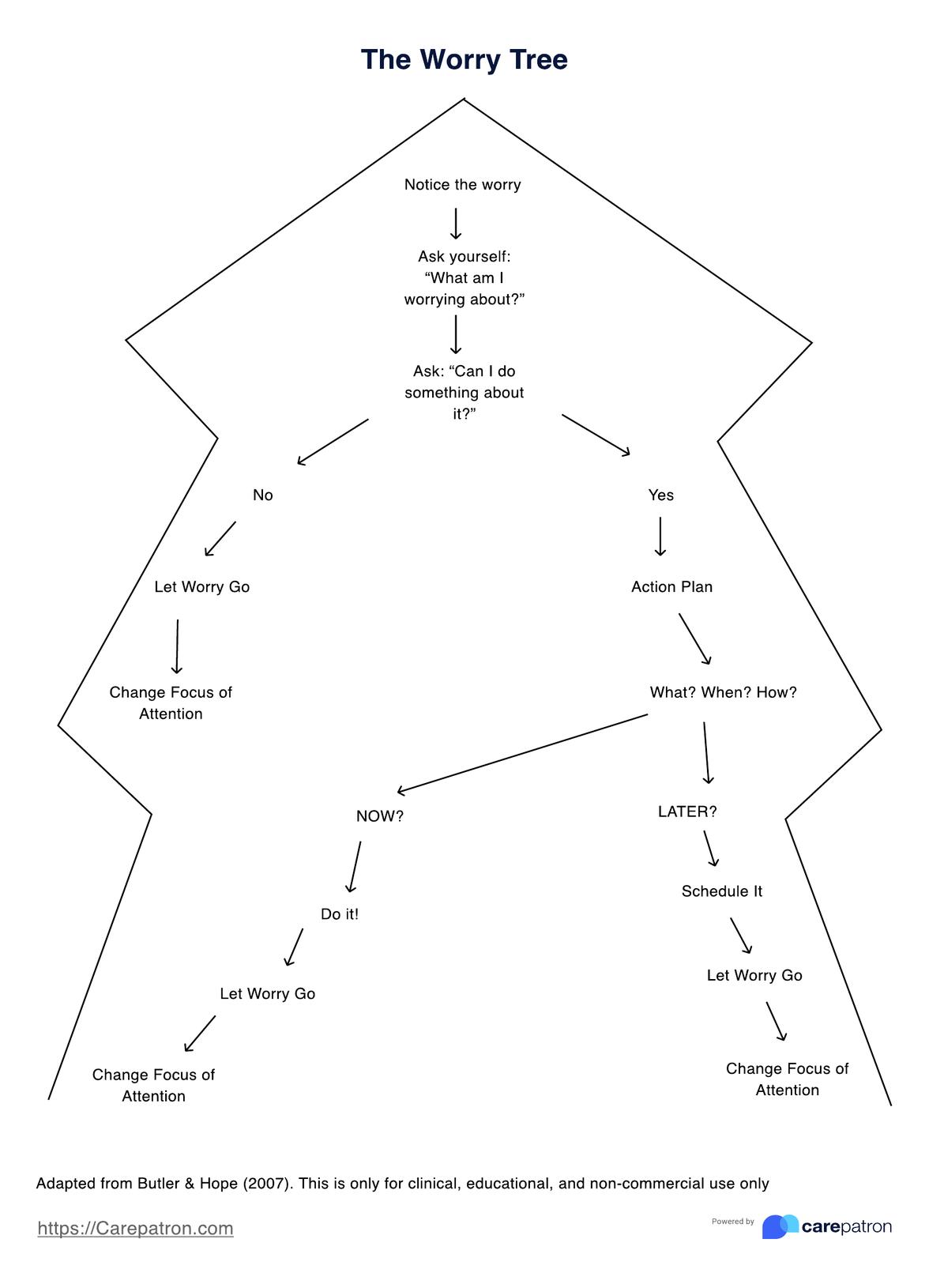




What is the Worry Tree technique?
Before discussing the Worry Tree technique, let's briefly talk about Cognitive Behavioral Therapy.
Cognitive Behavioral Therapy is a form of therapy geared to help patients battling depression, anxiety, substance abuse, eating disorders, and other mental health issues. It operates on the belief that our mental health issues are partly the result of unhealthy and unhelpful ways of thinking and dysfunctional and unhelpful behavioral patterns.
Through this belief, CBT seeks to address these problems by helping patients become aware of their cognitive distortions and problematic behavioral patterns and then teaching skills so they can resolve conflicts, become more emotionally resilient, increase self-confidence, relax, solve problems, and cope healthily.
The Worry Tree technique is normally included in Cognitive Behavioral Therapy programs, especially when a therapist is dealing with a patient with anxiety or anxiety disorders.
It's a technique that helps patients examine their worries (especially hypothetical worries) and organize them in such a way that they break them down into something manageable (if possible) and develop actionable steps to address said worries.
It's a great technique that arms patients with the skills of analysis, compartmentalization, and problem-solving so they can prevent their worries from overwhelming them, especially during the worst possible times.









