
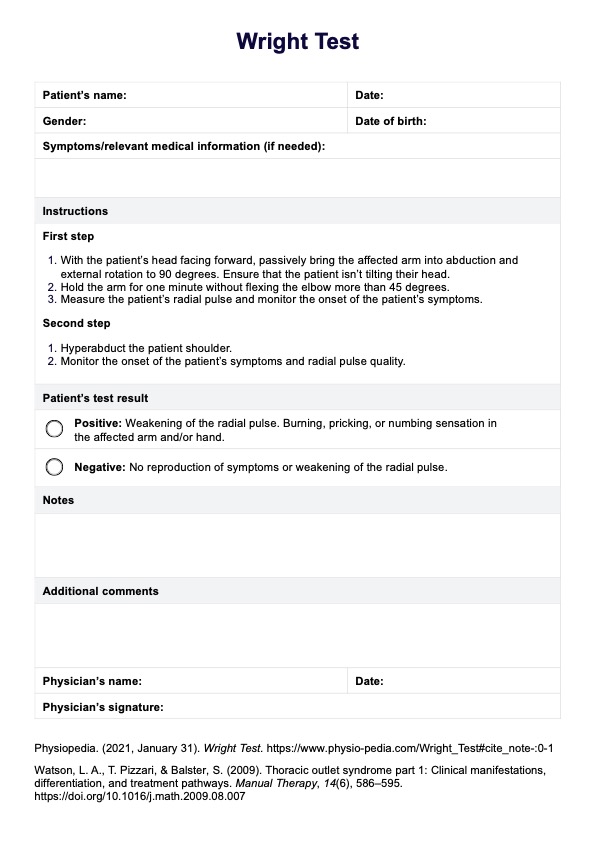




What is a Wright Test?
The Wright Test, also known as the hyperabduction test or thoracic outlet syndrome test, is a test that is used by practitioners such as physiatrists, neurologists, certain surgeons, psychiatrists, and general practitioners, to help diagnose thoracic outlet syndrome.
Before explaining the test, here's a brief 101 on thoracic outlet syndrome.
Thoracic outlet syndrome is a term used to describe a group of disorders wherein the nerves, arteries, or veins in the lower neck and upper chest area. What causes the syndrome can be unidentifiable or any of the following:
- Anatomical defects (e.g., cervical ribs)
- Hypertrophy of the anterior scalene muscle
- Repetitive motions or injuries from activities (can be related to one's job or sport)
- Pregnancy
- Bodybuilding
- Weight gain
- Tumor on the neck
- Whiplash injury
The test is meant to check the patient's symptom onset and radial pulse when the affected shoulder/arm is adducted and flexed.









