When is it best to conduct the Y Balance Test?
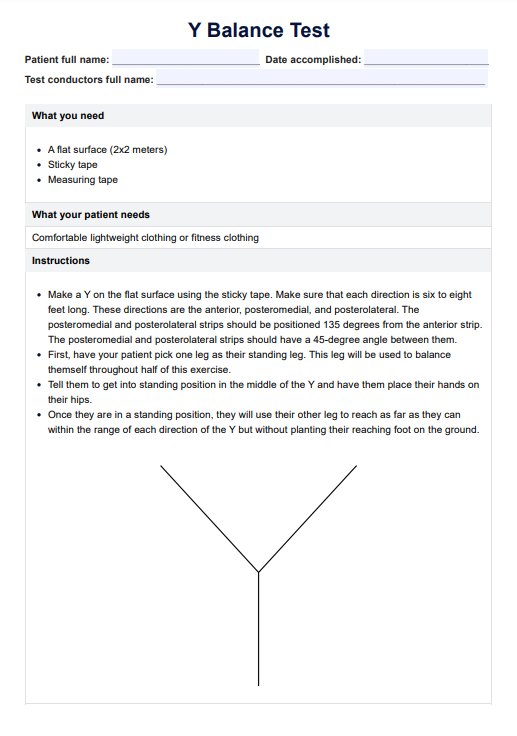
The Y Balance Test, a variation of the Star Excursion Balance Test (SEBT), is a valuable tool for assessing dynamic balance and identifying potential risk factors for lower extremity injuries. Its application is most appropriate in sports health.
Pre-season screening for athletes
Conduct the Y Balance Test during pre-season evaluations for high school basketball players and college football players. This timing allows practitioners to establish a baseline for dynamic balance performance, enabling monitoring changes throughout the season.
Injury risk assessment
Utilize the Y Balance Test for injury risk assessments, especially for collegiate athletes with a history of noncontact lower extremity injuries or chronic ankle instability. Identifying balance deficits can inform targeted interventions to mitigate injury risk.
Incorporation into comprehensive movement screens
Integrate the Y Balance Test into comprehensive movement screens, such as the Functional Movement Screen (FMS). This approach provides a more holistic understanding of an individual's movement patterns, combining static and dynamic balance assessments to enhance the overall evaluation.
Post-injury rehabilitation
Implement the Y Balance Test during rehabilitation for athletes with previous injuries. Tracking changes in dynamic balance, particularly in the anterior reach direction, can guide rehabilitation strategies and ensure a safe return to play.
Monitoring progress in dynamic balance
Periodically conduct the Y Balance Test throughout the season to monitor an athlete's dynamic balance progress. Regular assessments can help identify emerging imbalances and allow timely interventions to optimize performance and reduce injury risk.
Integration with lower extremity functional scale
Combine the Y Balance Test with the Lower Extremity Functional Scale to obtain a more comprehensive profile of an individual's lower extremity function. This dual approach addresses subjective and objective measures, aiding in a more nuanced understanding of a person's risk for lower extremity injuries.
Adjusting for anatomical variations
When conducting the Y Balance Test, consider a person's leg length and anterior superior iliac spine height. This adjustment accounts for individual anatomical differences, ensuring a more accurate assessment of dynamic balance capabilities.
Identification of asymmetries
Attention should be paid to balance test reach asymmetry, especially in the anterior direction. Asymmetries in dynamic balance may indicate an increased risk of lower extremity injuries, so addressing these imbalances through targeted interventions is crucial.
By strategically incorporating the Y Balance Test at different stages of an athlete's journey, practitioners can proactively manage and enhance dynamic balance, ultimately contributing to improved sports performance and reduced risk of lower extremity injuries.