




What is Acceptance and Commitment Therapy?
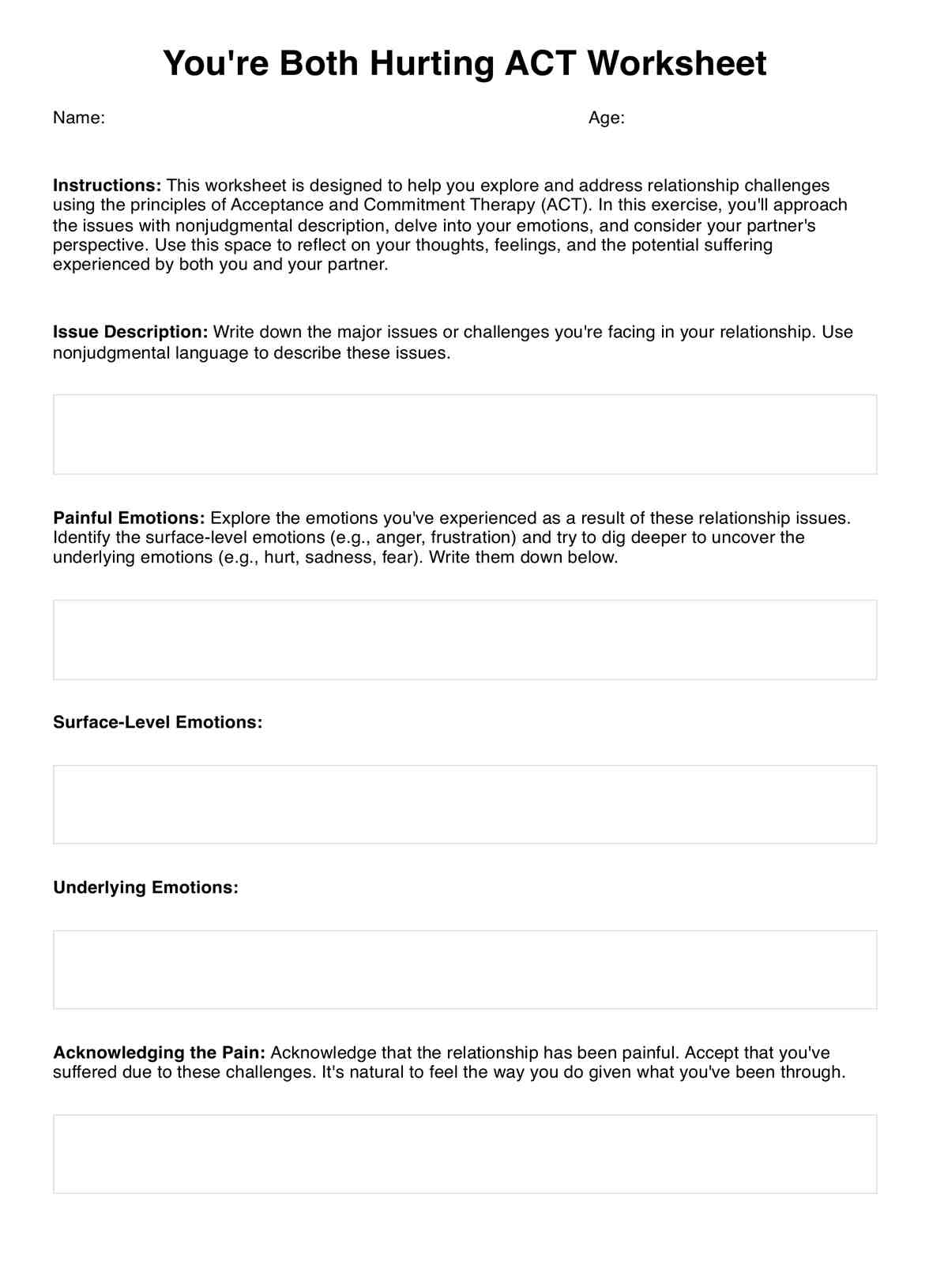
Dealing with relationship problems requires a delicate and empathetic approach. Instead of blaming or criticism, it's important to initiate conversations with nonjudgmental descriptions. This creates an environment conducive to open communication, allowing both partners to express their feelings and concerns. By delving beyond surface-level emotions like anger and frustration, individuals can identify underlying emotions such as hurt, fear, or vulnerability, which often contribute to relationship challenges. This understanding sets the stage for productive problem-solving and encourages mutual growth.
Acceptance and Commitment Therapy (ACT) is an invaluable therapeutic approach in addressing relationship issues. It revolves around accepting negative emotions and experiences while committing to actions that align with personal values. This is particularly relevant to relationships, as ACT encourages partners to explore their own feelings, thoughts, and responses without judgment, promoting a non-hostile atmosphere for communication.
In , six fundamental processes guide the journey toward psychological flexibility and well-being. These processes include identifying personal values, committing to actions in alignment with those values, detaching oneself from thoughts, practicing cognitive defusion to lessen the impact of negative thought patterns, fostering acceptance of inner experiences, and engaging with the present moment.
When applied to relationships, ACT can help partners understand their emotions and reactions within the context of their values. This understanding fosters empathy and aids in comprehending the partner's perspective. ACT's emphasis on mindfulness and presence also encourages effective communication by allowing individuals to respond thoughtfully rather than reactively. By incorporating ACT principles, individuals can navigate relationship problems with greater emotional intelligence, promote understanding, and create a foundation for positive change and growth within the relationship.









